
Abu Dhabi · UAE-Wide Supply
Foot Protection Supplier in Abu Dhabi
Feet take the hazards nothing else on a worksite absorbs — dropped loads, nails through a sole, wet floors, hot surfaces, chemical spill. Foot protection is the footwear and related equipment that stands between those hazards and an injury that puts a worker off site for weeks.
BN International General Trading supplies foot protection to construction, oil & gas, manufacturing and facilities teams across Abu Dhabi and all seven Emirates: certified safety shoes and boots, gumboots for wet and washdown environments, and the covers, insoles and socks that decide whether footwear is actually worn all shift. Choose your category below, or send us the hazard and we’ll match the specification.
Foot Protection Categories
Find the Right Foot Protection for Your Site
Foot protection splits by how the footwear is built and what it’s built to survive. These four groups cover the range we supply.
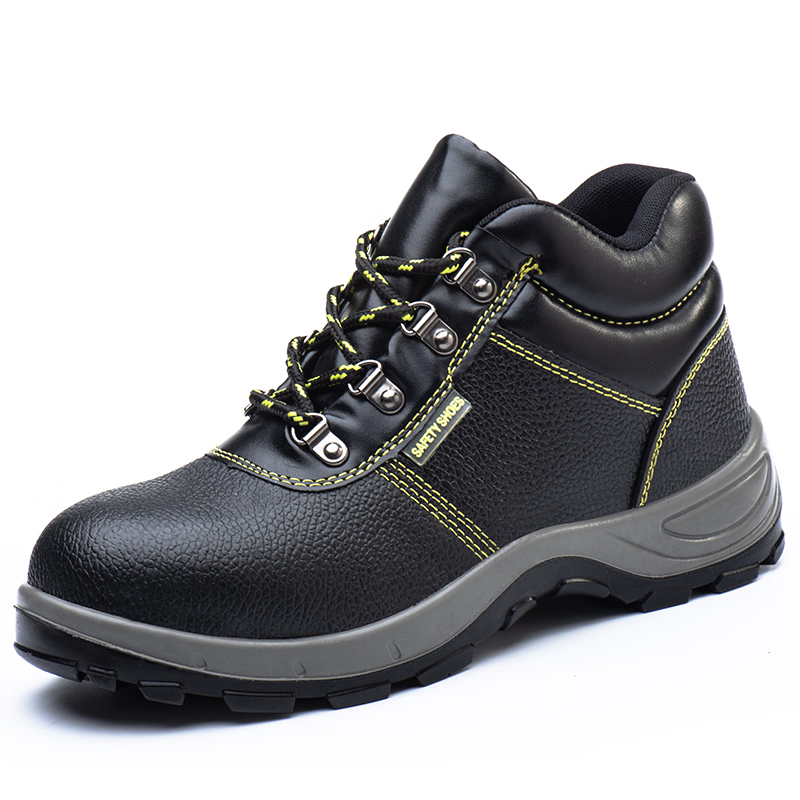
Safety Shoes
Low-ankle protective footwear for general industrial, construction and warehouse work. Leather and composite uppers with certified toe protection, in the ratings most UAE sites specify as standard issue.
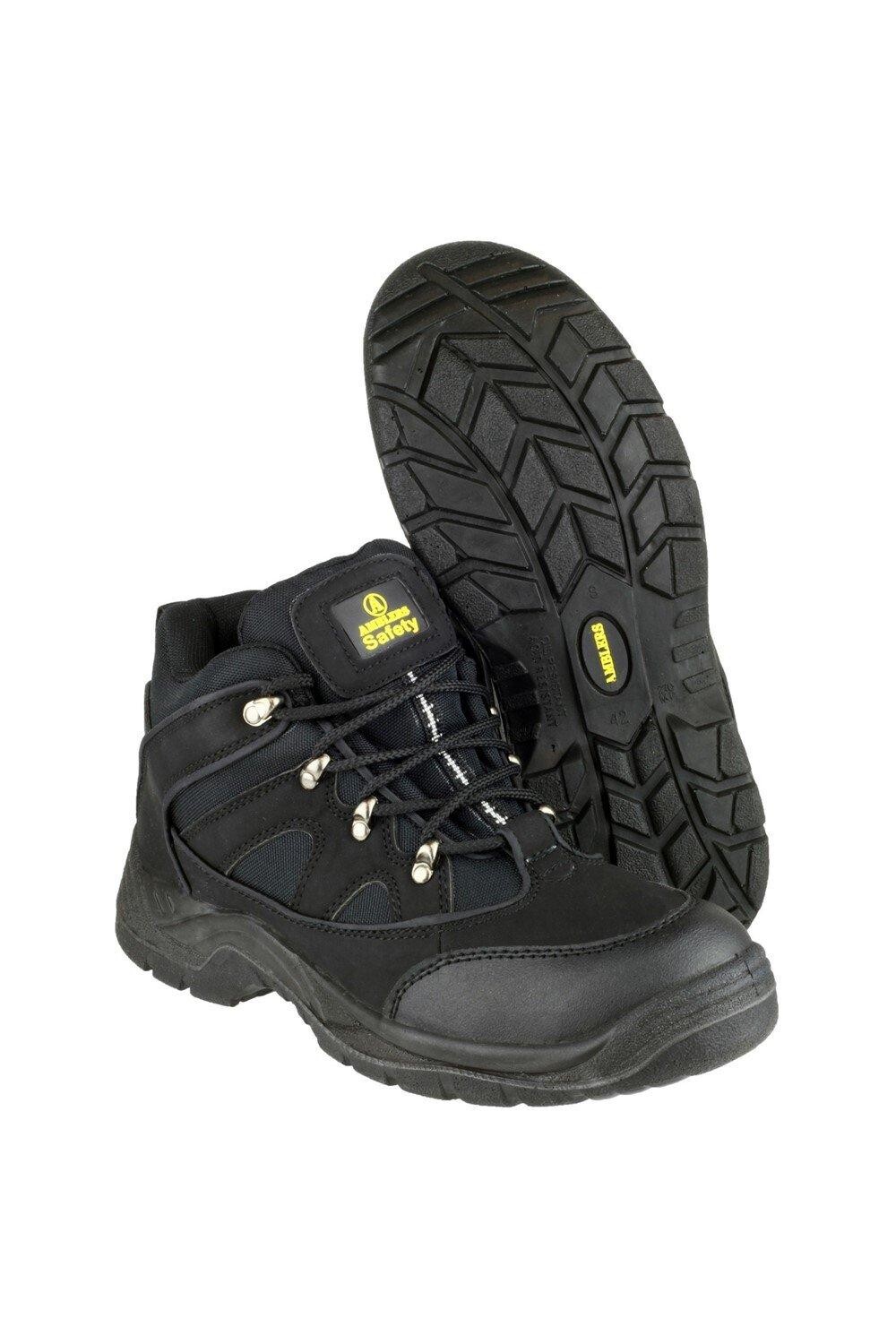
Safety Boots
High-ankle boots and rigger boots for rough ground, uneven terrain and work where ankle support matters as much as toe protection. The step up from a shoe when the site surface is the problem.
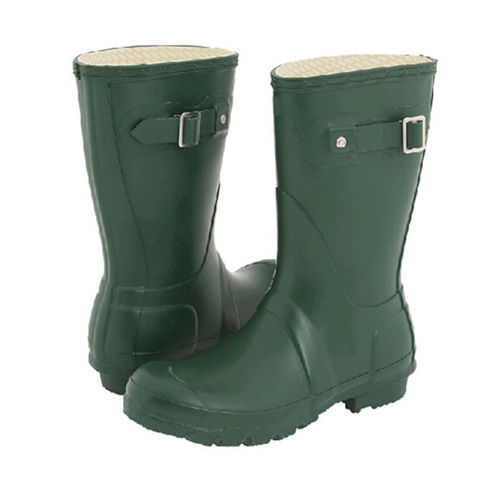
Gumboots & Wellingtons
Moulded rubber and PVC footwear for standing water, washdown areas, concrete work and chemical handling. Built as a single sealed unit rather than a stitched upper, so there’s no seam for liquid to find.
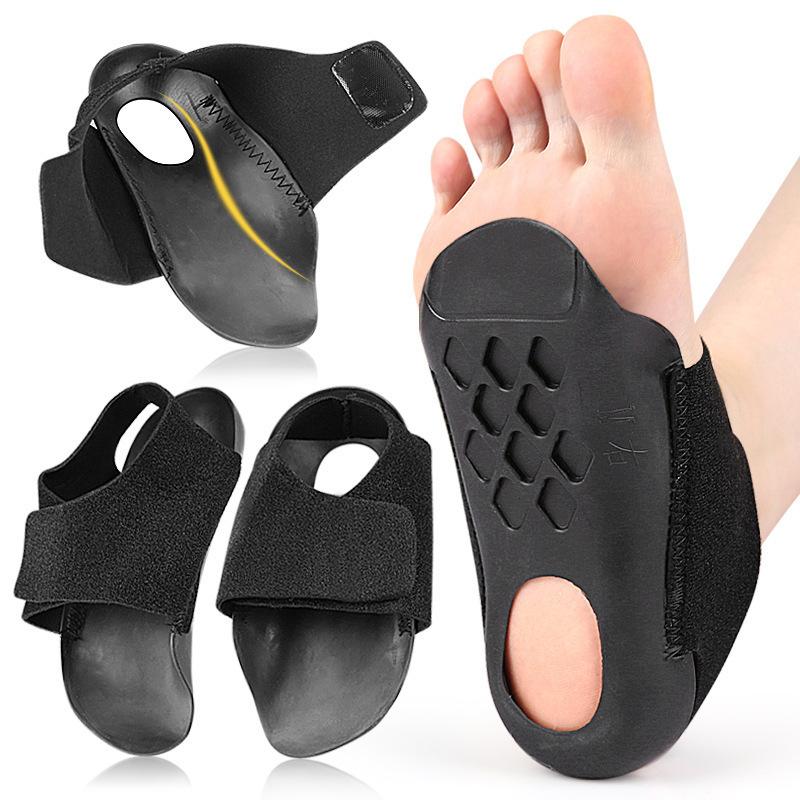
Foot Protection Accessories
Shoe and boot covers, insoles, socks and fit aids — worn with certified footwear rather than instead of it. The parts crews get through fastest and procurement forgets to reorder.
Certified vs Non-Certified
What Counts as Foot Protection
Not everything on this page is PPE in the certified sense, and knowing which is which matters when an HSE inspector asks.
Certified protective footwear — safety shoes, safety boots and safety gumboots — is tested and marked to a recognised standard, and is what a site risk assessment means when it specifies foot protection. It carries a rated toe cap and, depending on the class, penetration resistance, water resistance and slip performance.
Accessories carry no protection rating and don’t replace footwear. A shoe cover controls contamination; it doesn’t stop a dropped load. An insole improves comfort and can improve compliance, but comfort isn’t a rating. Both are worth stocking — just not in place of the footwear underneath.
Getting that boundary right is the single most common sourcing mistake we see: a crew issued covers for a clean area, working the same shift on a floor where things get dropped.
How to Read a Rating
Understanding EN ISO 20345 Classifications
Safety footwear sold in the UAE is generally certified to EN ISO 20345, the European standard for footwear with a protective toe cap. Every class under it starts from the same base — a toe cap tested to 200 joules of impact — and then adds protection in layers. Read the code and you know what the footwear does before you handle it.
Class | What it adds to the base requirement
|
|---|---|
| SB | Base requirement only: 200 J toe cap, baseline slip resistance |
| S1 | SB + closed heel, antistatic properties, energy-absorbing heel |
| S1P | S1 + penetration-resistant midsole |
| S2 | S1 + water-resistant upper |
| S3 | S2 + penetration resistance + cleated outsole |
| S4 | All-rubber or all-polymeric construction, antistatic, energy-absorbing heel |
| S5 | S4 + penetration resistance + cleated outsole |
| S6 | S2 + fully waterproof footwear |
| S7 | S3 + fully waterproof footwear |
Two things worth knowing when you read the code:
S4 and S5 are gumboots
Those two classes cover moulded polymeric footwear specifically — which is why gumboots sit as their own category here rather than as a variant of safety boots. If a wet or washdown area is specified as S5, a leather S3 boot doesn’t meet it regardless of how waterproof the upper is.
Two marking systems are in circulation
The 2022 revision made slip resistance a baseline requirement for all classes and retired the old SRA, SRB and SRC markings in favour of a single optional SR mark for enhanced performance. It also split penetration resistance into P for steel midsoles and PL or PS for non-metallic ones, tested with different nail diameters — so you’ll now see codes like S3L, S3S or S1PS. Footwear certified to the earlier 2011 version remains valid while stock lasts, which means a single delivery can legitimately contain both marking systems.
That matters for procurement, not just for trivia. If your HSE file specifies SRC and the footwear you receive is marked to the 2022 standard, it won’t carry that marking at all — and the paperwork needs to reflect the current classification rather than the one the spec was written against.
Which class suits a given role depends on the footwear type and the task. That’s covered model by model on our Safety Shoes, [Safety Boots] and [Gumboots] pages.
Matching Protection to Hazard
Matching Footwear to the Hazard on Site
The hazard on the ground decides the footwear — not the industry on the letterhead. Use this to narrow the specification before you look at models.
Hazard | What it calls for
| Common where
|
|---|---|---|
| Falling or rolling loads | A rated toe cap — the base requirement in every class | Anywhere materials are lifted, stacked or moved |
| Sharp objects underfoot | Penetration-resistant midsole: P for steel, PL or PS for non-metallic | Construction, demolition, scrap and steel handling |
| Damp ground and splash | Water-resistant upper | General outdoor site work |
| Standing water and washdown | Fully waterproof or moulded polymeric footwear | Concrete work, food processing, marine and port |
| Slippery floors | Outsole compound and tread; the SR mark for oily surfaces | Kitchens, process floors, wash bays |
| Chemical splash | Material compatibility, checked against your SDS | Chemical handling, cleaning, process plant |
| Static and flammable vapour | Antistatic footwear on a dissipative floor | Fuel depots, petrochemical, electronics |
| Contamination control | Covers worn over certified footwear | Cleanrooms, food handling, finished interiors |
Two limits the table can't show. A class rating says nothing about which chemicals the footwear resists — that comes from the sole and upper material, so check it against the substance on your safety data sheet rather than assuming S3 covers it. And antistatic footwear only works as part of an earthed system that includes the flooring, and usually anti-static workwear alongside it.
Send us the task and the ground conditions and we'll identify suitable options.
Where It's Used
Foot Protection Across UAE Work Environments
Construction & Infrastructure
Every foot hazard tends to appear on one site at once. Toe protection and a penetration-resistant midsole are the usual baseline, with ankle support added where the terrain justifies it.
Oil & Gas
Antistatic requirements, hydrocarbon exposure and wet process areas — often with a different specification for each zone of the same facility.
Manufacturing & Industrial
Impact and compression protection is the starting point. What decides whether footwear is worn correctly is how it holds up over an eight-hour shift on a hard floor.
Warehousing & Logistics
Forklift traffic makes toe and metatarsal impact the primary risk. The walking distance makes cushioning and fit a safety factor rather than a comfort upgrade.
Facilities, Cleaning & Food
Slip resistance leads here. Cleaning chemicals narrow the material choice, and hygiene-controlled areas add covers over standard footwear.
Marine & Ports
Wet decks and washdown routines are where moulded gumboots earn their place over stitched leather boots.
If your operation isn’t listed, the same logic applies — describe the ground conditions and what gets handled, and the footwear follows from there. You can also browse our full range of certified PPE and industrial safety products for protection beyond footwear.
Why BN International
Why Businesses Source Their Safety Footwear From Us
Footwear is the PPE category where sourcing goes wrong most often, because fit decides whether the protection works at all. A coverall in the wrong size is uncomfortable. A boot in the wrong size gets swapped for a trainer by Friday.
So we hold complete size ranges — a 40-pair crew order doesn’t sit waiting on three pairs. And we work from your specification rather than our catalogue, including telling you when a cheaper class covers the risk.
Certified footwear ships with the manufacturer’s declaration of conformity, and we confirm whether it’s marked to the 2011 or 2022 standard — mismatched paperwork causes real problems on inspection. BN International General Trading is registered with ADRA under licence CN-6387714, with a physical Al Nahyan office and a team that answers it.
Nationwide Coverage
UAE-Wide Foot Protection Supply
We’re based in Al Nahyan, Abu Dhabi, and hold footwear stock locally for dispatch across every Emirate — Abu Dhabi, Dubai, Sharjah, Ajman, Ras Al Khaimah, Fujairah and Umm Al Quwain, including the industrial zones where most of it goes: Mussafah, ICAD, KEZAD, Ruwais, JAFZA and Hamriyah.
Footwear orders run differently from other PPE. A crew rollout needs a size run collected before it ships; a replacement order needs to go out the same week. We schedule around which one you’re doing rather than a fixed delivery window. Cash on delivery is available, along with bank transfer and corporate invoicing for account and project customers.
FAQ
Frequently Asked Questions
Foot protection is the equipment that protects the foot and ankle from workplace hazards — primarily certified protective footwear with a rated toe cap, plus the covers and accessories used alongside it. Under UAE workplace safety requirements, employers must provide protection matched to the actual hazard present, which means footwear is selected from a risk assessment rather than issued as a uniform item.
Safety shoes are one part of it. Foot protection also covers safety boots, gumboots and the accessories worn with them — each suited to a different combination of hazard and environment.
Not as certified PPE. Covers control contamination in either direction, but they carry no protection rating and are worn over certified footwear, never instead of it. They sit under [Foot Protection Accessories].
Most safety footwear supplied here is certified to EN ISO 20345. Some stock carries ASTM ratings instead, depending on origin and client specification. We confirm the applicable standard and classification for each product when we quote.
Yes — from a single replacement pair through to full workforce rollouts, with size runs coordinated as one order and bulk pricing on crew quantities.
Yes, to all seven Emirates, scheduled around your project timeline.
Get Started Today
Need Foot Protection for a Crew or Project?
Send us the footwear type, the hazard or class you need to meet, quantities, size breakdown and delivery location. We’ll confirm suitable options, the applicable certification and a quotation — usually the same working day.
Supplying foot protection across Abu Dhabi, Dubai, Sharjah, Ajman, Ras Al Khaimah, Fujairah, Umm Al Quwain and the wider UAE.